Understanding the Different Types of Databases
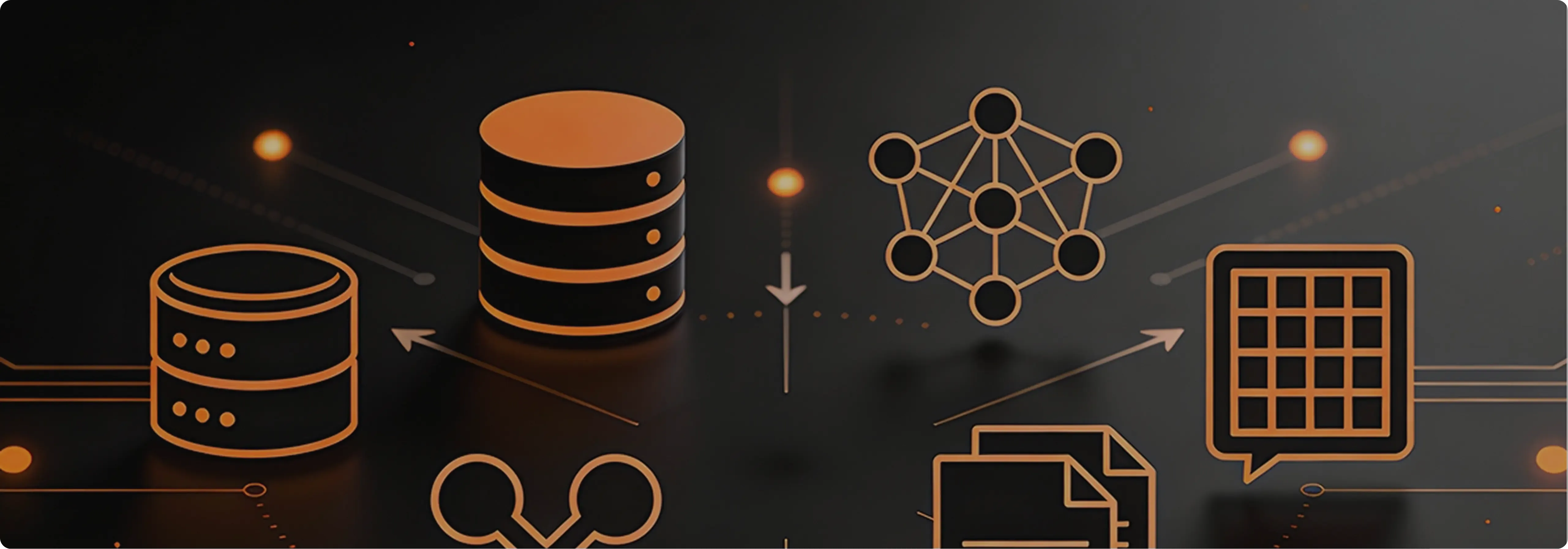
As data management becomes crucial for businesses of all sizes, knowing the right type of database to use is essential for efficiency, scalability, and performance. Here's a quick breakdown of some of the most common types of databases and their use cases :
1. Hierarchical Databases
This database organizes data in a tree-like structure, where each record has a single parent and possibly many children. It's ideal for applications with parent-child relationships, like organizational charts or file systems.
2. Network Databases
Similar to hierarchical databases but more flexible, network databases allow each record to have multiple parent and child relationships. They’re excellent for complex data relationships, like supply chain management.
3. Object-Oriented Databases
These databases store data in objects, as used in object-oriented programming. It’s perfect for applications that rely on complex data relationships, like software engineering and AI.
4. Relational Databases (RDBMS)
Probably the most popular type, relational databases store data in tables (rows and columns) and use SQL for querying. They’re widely used in banking, e-commerce, and enterprise applications due to their ability to manage large datasets efficiently.
5. Cloud Databases
Cloud databases are hosted and managed in the cloud, offering flexibility, scalability, and high availability. They're essential for modern businesses relying on cloud services for real-time access, like SaaS applications.
6. Centralized Databases
As the name suggests, a centralized database stores all data in one central location. It's commonly used by corporations where data consistency is a priority. However, it may become a bottleneck as the organization grows.
7. Operational Databases
As the name suggests, a centralized database stores all data in one central location. It's commonly used by corporations where data consistency is a priority. However, it may become a bottleneck as the organization grows.
8. NoSQL Databases
Unlike traditional relational databases, NoSQL databases offer flexibility by supporting unstructured data (JSON, key-value pairs). They’re perfect for modern applications with large-scale, dynamic data like social media platforms and IoT systems.
8. The Right Choice ?
The type of database you choose depends on your specific business needs—whether you're dealing with complex relationships, large datasets, or real-time operations. Selecting the right database can significantly enhance performance, security, and scalability.