
Interactive 3D Design Experience
Project Overview
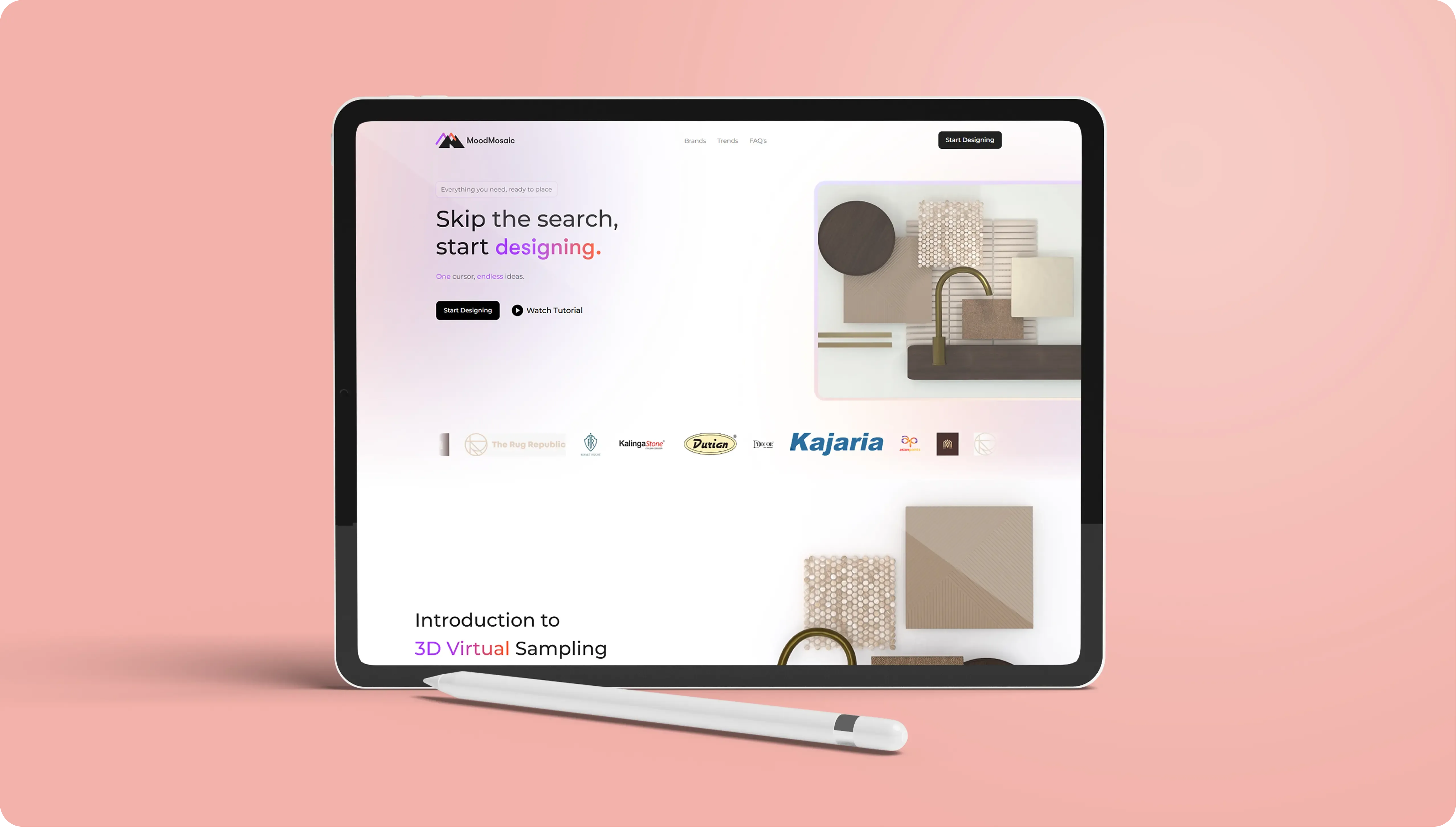
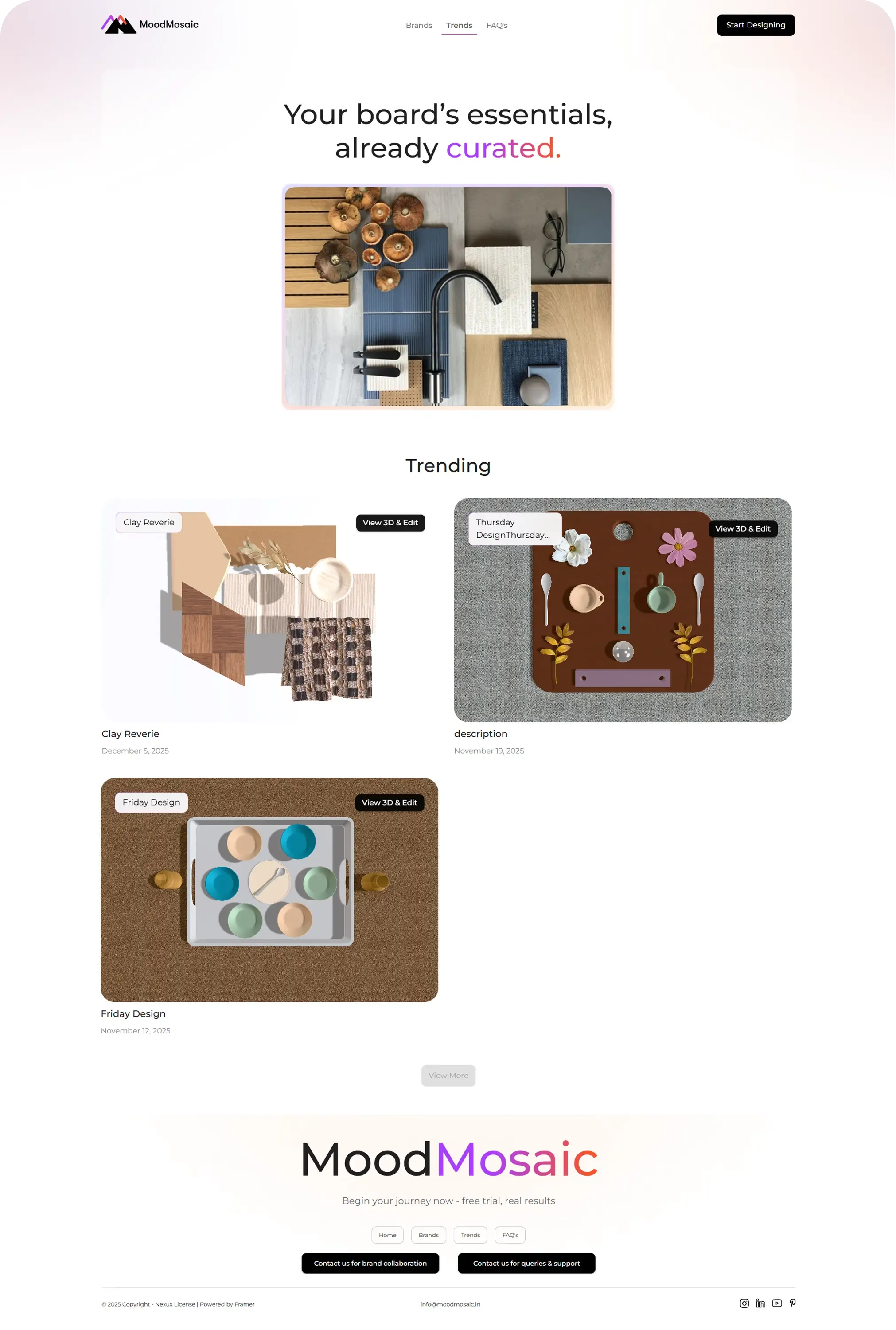
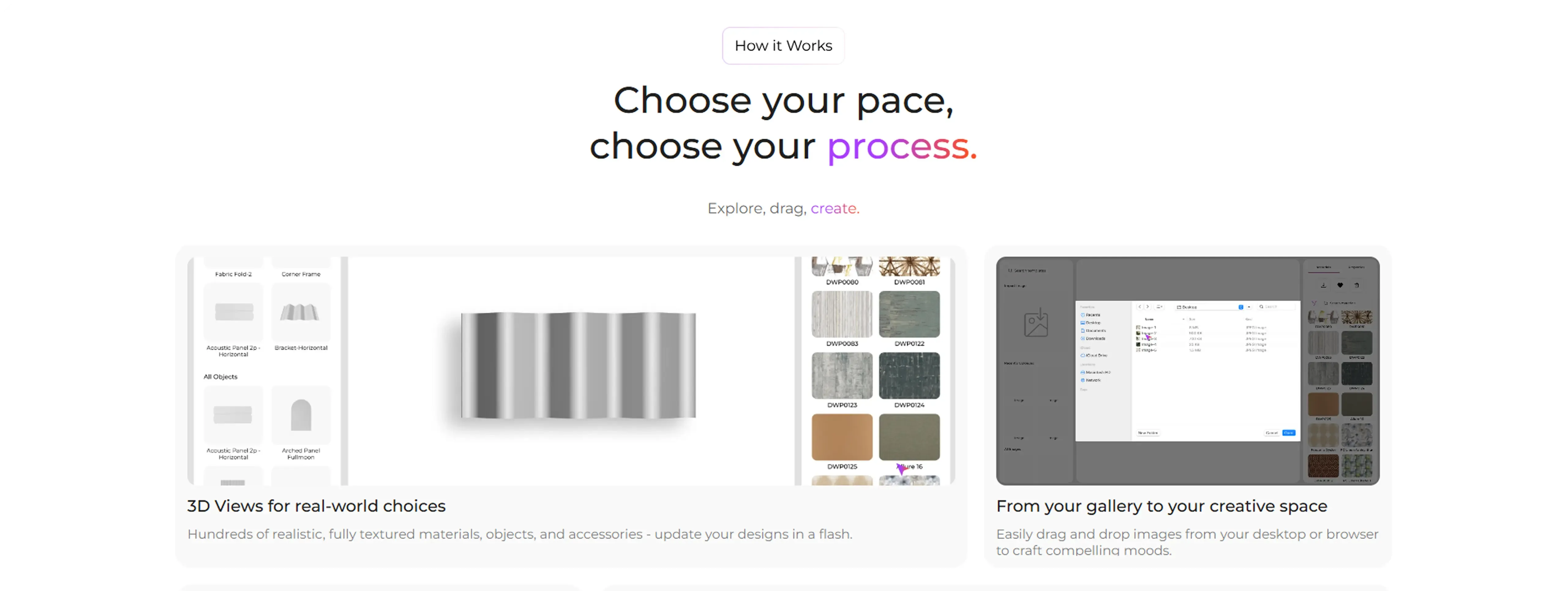
MoodMosaic is a 3D object design tool enabling users to place, customize, and manipulate 3D objects on a canvas. Users apply materials, textures, and adjust properties like rotation and scaling in real-time. You enhanced frontend/backend architecture for scalability—building interactive React UI with ThreeJS, real-time event listeners, and optimized Node.js/Express backend with Prisma/MongoDB for high data throughput.
Industry : 3D Design & Creative Software Tools.
Location : India
Year : 2024
Technologies Used
AI Detect
Cloud
Security
Automation
Analytics
Sensors
MySQL
Express.js
React Native
Challenges
Heavy 3D object rendering caused browser lag and frame drops when loading 100+ complex models on canvas. Real-time manipulation (rotation/scaling) stuttered under concurrent texture/material updates. MongoDB queries slowed with high-volume object data during collaborative multi-user sessions. Prisma ORM overhead impacted backend throughput for large asset libraries and real-time sync.
- ThreeJS memory leaks during dynamic material/texture swaps.
- Node.js event loop blocking from heavy geometry computations.
- Race conditions in real-time event listeners during multi-user edits.
Solutions
1. THREE.JS PERFORMANCE OPTIMIZATION
Rendering multiple high-poly 3D models caused frame drops and UI lag. Implemented LOD (Level of Detail) switching and geometry instancing to efficiently handle 100+ complex models at 60fps. Offloaded heavy computations like raycasting and texture processing to Web Workers, significantly improving main thread performance.
2. REAL-TIME SYNC ARCHITECTURE
Collaborative editing required low-latency synchronization across multiple users. Built a real-time architecture using Socket.io with Redis pub/sub to support 50+ concurrent users. Introduced debounced event handling to prevent excessive re-renders during object manipulations, ensuring smooth user interactions.
3. BACKEND SCALABILITY
Increasing traffic and asset complexity led to backend performance bottlenecks. Scaled Node.js servers horizontally using clustering with PM2. Implemented a Redis caching layer to store pre-processed 3D assets, reducing database load and cutting repeated queries by 70%.
Results
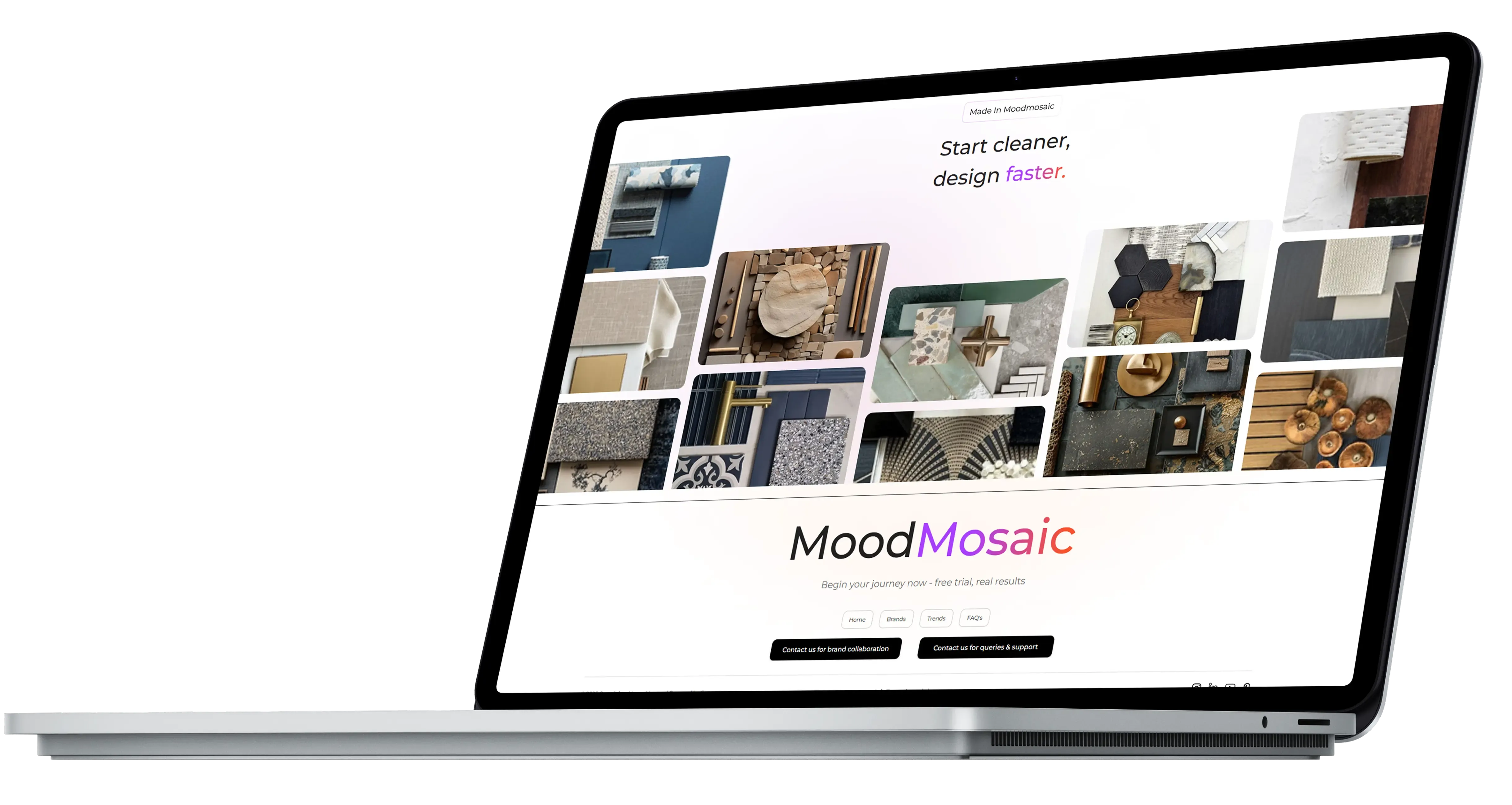
MoodMosaic transformed into a blazing-fast 3D design platform handling 100+ complex models at locked 60fps through LOD switching and geometry instancing. Real-time collaboration scaled smoothly for 50+ simultaneous users via optimized Socket.io with Redis pub/sub, eliminating race conditions completely. Backend throughput hit 10k+ objects per second with MongoDB sharding and Prisma batching query times slashed 90% under heavy loads. Node.js clustering plus Redis caching cut database hits by 70%, delivering production-grade performance for professional workflows across high-concurrency sessions.